


>$280 billion
mobilized by blended finance towards sustainable development in developing countries (Convergence, 2026)
Blended Finance
Blended finance refers to the use of catalytic capital from public or philanthropic sources to mobilize additional investment on commercial terms for sustainable development, often in emerging markets and developing economies (EMDEs). Blended finance structures bring public, philanthropic and private capital into a single structure, with each investor playing a distinct role and taking a different level of risk and return.
A blended approach allows investors with different investment objectives and risk profiles to invest in the same structure. This can be particularly helpful in EMDEs, where the risk-return profiles of projects or investments are often out of line with the regulatory, fiduciary, or commercial constraints of private investors. By improving that balance of risk and return, blended finance can make otherwise unviable investments more attractive to private capital and help mobilize additional financing toward development outcomes.
Catalytic capital works by accepting terms that commercial investors typically do not. Providers such as Multilateral Development Banks (MDBs), Development Finance Institutions (DFIs), donor governments, private impact investors, and philanthropies can take first-loss positions, provide guarantees on below-market terms, accept lower or later returns, or fund technical assistance.
In EMDEs, this may include mitigating foreign-exchange risk, uncertainty around project revenues or offtaker creditworthiness, or risks associated with newer technologies and markets. By taking these risks while ensuring any implied subsidy is minimized and time bound, catalytic capital leaves commercial investors better protected and better rewarded for the risk, mobilising private capital that would not otherwise invest.
Blended finance has shown it can mobilize private capital at scale, but remains small and slow to scale. Climate-related transactions now account for most blended finance by value. Yet total deal volume, at around USD 26 billion in 2025 (Convergence, 2026), is less than 1% of the USD 3.2 trillion a year that EMDEs other than China need to invest by 2035 (IHLEG, 2025).
Many structures remain bespoke, complex and costly to assemble, lengthening negotiations and limiting participation by institutional investors. Most blended funds already follow a handful of recurring structures. Greater standardization, common terminology, and better deal data could reduce transaction costs and make it easier for local investors and fund managers to participate. Building the capacity to design and replicate these structures will be critical to moving blended finance from one-off transactions toward greater scale.
This section brings together resources to help finance professionals, educators and others build the understanding and skills to structure blended finance and mobilise private capital.
Featured Resources
View all resourcesView all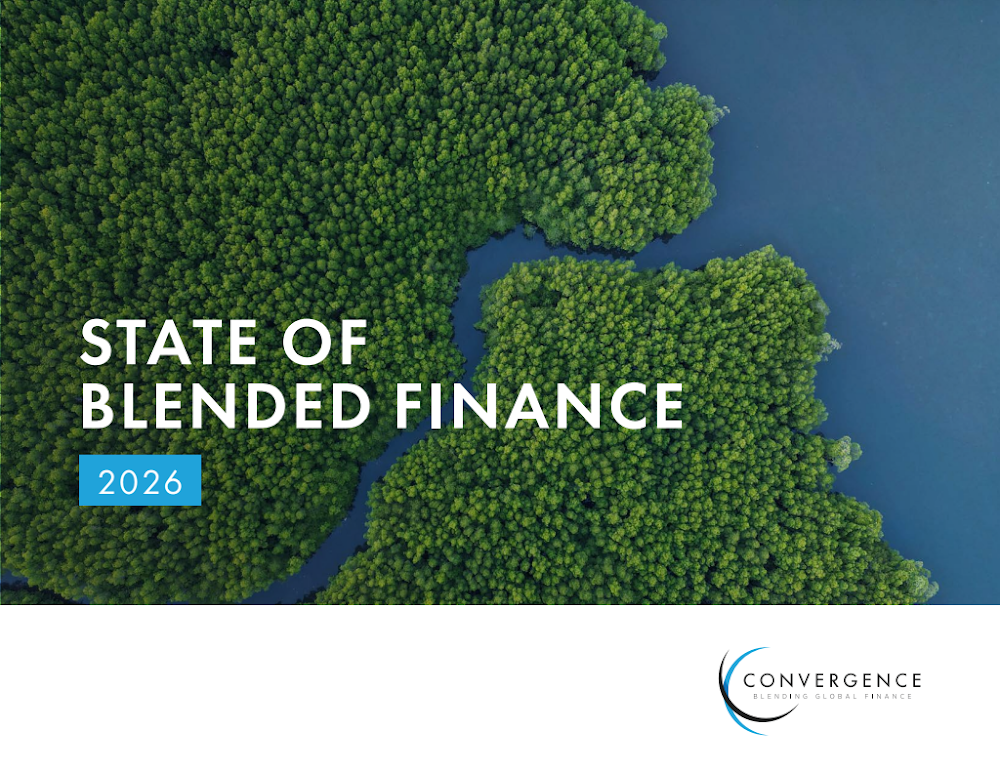
State of Blended Finance 2026
This resource examines the state of the blended finance market in 2025 and the outlook for scaling investment in emerging markets and developing economies. It analyzes market trends, investment risks, financing structures, and country platforms.
Convergence
Designing Blended Finance Vehicles: Learnings from Convergence's Design Funding Program
This report provides learnings from early-stage grants supporting the design and launch of blended finance vehicles that mobilize private capital for sustainable development in emerging markets.
Convergence
Strategic Framework for Blended Finance
This resource introduces a country-level framework to strengthen the enabling environment for blended finance across South and Southeast Asia, providing guidance to mobilize private capital through scalable market mechanisms.
United Nations Development Programme (UNDP)Convergence
DFI Working Group on Blended Concessional Finance for Private Sector Projects Joint Report
This resource provides an update on blended concessional finance for private sector projects, presenting 2021 financing data, developments in governance and implementation through 2022, and project case studies.
International Finance Corporation (IFC)
OECD DAC Blended Finance Guidance 2025
This resource provides guidance for designing and deploying blended finance to mobilize private capital for sustainable development. It translates blended finance principles into actionable approaches, supported by thematic case studies.
OECD
The Role of Blended Finance in an Evolving Global Context
This resource examines the role of blended finance in mobilizing private capital for sustainable development in emerging markets and developing economies. It outlines financing instruments, practical examples, and principles for implementation.
World Bank Group (WBG)
Scaling Blended Finance: Practical tools for Blended Finance Fund design
This resource provides guidance for those developing or assessing blended finance fund structures. It introduces two tools, a typology of fund archetypes and a scorecard, to support fund design, assessment, and capital mobilization.
Boston Consulting Group (BCG)British International Investment (BII)
Scaling blended finance II: Optimising catalytic capital in blended finance funds
This resource provides practical tools for structuring catalytic capital within blended finance funds, focusing on investor constraints, selecting fit-for-purpose concessional instruments, and sizing those instruments appropriately.
British International Investment (BII)Glasgow Financial Alliance for Net Zero (GFANZ)+1
Blended Finance Playbook for Climate-Smart Agrifood Systems
This resource provides a practical playbook for concessional investors, including donors, foundations, DFIs and development agencies, on how blended finance can mobilize private capital and scale climate smart agrifood systems.
Climate Policy Initiative (CPI)
Blended finance: A true catalyst for change?
This resource reviews evidence on blended concessional finance, examining when and how it can mobilize private capital for development and climate goals, and outlining gaps, risks and lessons for more effective deployment.
European Bank for Reconstruction and Development (EBRD)
Mobilizing Private Capital for Climate Action in Emerging Economies
This resource summarizes investor roundtables in the lead up to COP30 focused on mobilizing private capital for climate action in emerging markets, centered on Brazil’s Ecological Transformation Plan. It captures investor and policymaker insights on aligning regulation, reducing risk, and creating investable pathways.
GSG Impact
Beyond the Myths: From Perceptions to Practice in Scaling Blended Finance to EMDEs
This practitioner guide to blended finance explores how to scale private capital mobilization in EMDEs by addressing risk perceptions, structural barriers, and market enablers.
Cambridge Institute for Sustainability Leadership (CISL)
LSFI Blended Finance Masterclass - Outcome Report
This report from LSFI’s 2023 Blended Finance Masterclass explains how blended finance structures mobilize private capital for sustainable development. It outlines key instruments, case studies, challenges, and lessons learned.
Luxembourg Sustainable Finance Initiative (LSFI)
Case Studies
View all resourcesView all
Industry collaboration to mobilize blended finance for resilient infrastructure
This case study examines the Infrastructure Resilience Development Fund (IRDF) strategy which is an innovative blended finance debt platform designed to mobilize institutional capital toward resilient infrastructure in emerging markets and developing economies (EMDEs)., The fund was built upon a blueprint developed by six IDF members: AXA, Convex, Generali, SCOR, Swiss Re, and Zurich, to address the specific investment criteria of the insurance sector., IDF engaged Global Infrastructure Partners, a part of BlackRock, to help design the fund, using their network and expertise to turn the blueprint into an investable structure, and then to act as investment manager. The IRDF targets small to mediumsized commercial infrastructure projects across a range of countries in Latin America, Africa and Asia. The strategy utilizes a blended finance structure which integrates public and private capital from the International Finance Corporation (IFC) alongside private insurance capital. It has two different pools, aimed at firms with different risk tolerances and risk-return requirements., The strategy aims to provide debt finance to infrastructure projects which are both resilient to physical risk and provide additional resilience to the communities that they operate in., The strategy officially launched in October 2025 and simultaneously announced its first close, having raised US$340 million from IFC and the six IDF members involved in its design. It has a target size of US$750 million., The fund has begun deploying capital and has maintained a healthy pipeline of potential projects., Pages 58-61
Glasgow Financial Alliance for Net Zero (GFANZ)
Catalyzing blended finance for climate adaptation through the GAIA Climate Loan Fund
This case study examines Mitsubishi UFJ Financial Group (MUFG)'s role in designing, structuring, and mobilizing capital for the GAIA Climate Loan Fund (GAIA), a blended finance debt platform aimed at attracting private capital for adaptation and resilience projects in EMDEs., Launched in 2024, GAIA provides long-term loans to sovereign, sub-sovereign, quasi-sovereign, and state-owned entities, including municipalities, development banks, and utilities, across 25 countries in Africa, Asia, and Latin America. At least 25% of capital is allocated to Least Developed Countries (LDCs) and Small Island Developing States (SIDS), where financing needs are most acute. The fund is targeting a total size of US$1.48 billion, with an initial close of US$600 million completed in November 2025 and final close anticipated in 2027. At least 70% of capital is dedicated to adaptation, focusing on water, food security, resilient infrastructure, and ecosystem protection, with the remaining 30% allocated to mitigation., GAIA’s structure combines concessional capital from public and development finance institutions, primarily the GCF and FinDev Canada, with commercial capital commitments, including from MUFG. This blended structure enables concessional capital to play a catalytic, risk-absorbing role, improving the risk–return profile and enabling private investors to participate on commercially viable terms., Specifically, GAIA employs a multi-layered capital stack, comprising a US$310 million junior first-loss tranche funded by concessional partners, a US$1.17 billion senior tranche for institutional investors, and an unfunded guarantee/insurance facility of up to US$300 million. This structure is further supported by additional credit enhancement mechanisms, including (i) a reserve account (capped at 5% of fund size) that absorbs senior-level losses using surplus income, and (ii) dedicated facilities to address key investment constraints, including an up to US$50 million technical assistance (TA) facility to support project preparation and an up to US$20 million foreign exchange (FX) hedging facility to enable local currency lending., Fund governance is structured to balance commercial and impact objectives, with a private-sector-led Credit Committee overseeing investment decisions and a public-sector-led Climate and ESG Committee ensuring alignment with climate and development outcomes., Pages 77-81
Glasgow Financial Alliance for Net Zero (GFANZ)
Innovative financing solutions for a sustainable economy, including natural capital and biodiversity
A European bank offering a comprehensive range of solutions to support client needs, BNP Paribas has a significant global presence., It has placed natural capital and biodiversity at the centre of its Growth Technology Sustainability (GTS) Strategic Plan, positioning these themes alongside the transition to carbon neutrality and sustainable finance as Group-level priorities., To advance its goals, the bank has set specific commitments and targets and published sector policies for Palm Oil, Wood Pulp, Agriculture, Mining, Oil and Gas, and Tobacco, which have a direct or indirect impact on natural capital and biodiversity. It has also developed specific tools (ESG-A) and a suite of innovative natural capital and biodiversity financing products and solutions to support clients., Examples of transactions in Asia are detailed: (1) A sustainability-linked loan to support a shipping client in their decarbonization journey; and (2) Preserving biodiversity in the Global South through a blended finance facility targeted at coral reef conservation.
Glasgow Financial Alliance for Net Zero (GFANZ)
Developing a new blended finance platform to unlock electric vehicle adoption in India
Transport is India’s third-highest greenhouse gas (GHG) emitting sector, accounting for 13% of the country’s CO2 footprint. Emissions are set to rise further with population growth, increasing industrialisation and urbanisation. There is a clear opportunity to decarbonise the sector through electrification. India’s EV industry has had limited investment and is presently underdeveloped. Consumers have been reticent to adopt new modes of transport due to factors such as the high upfront cost, uncertain technology and range anxiety. Low consumer uptake, a lack of capital inflows and investment in an emerging economy contributed to investors’ high risk-adjusted return expectations. Macquarie Asset Management (Macquarie) has developed a new blended finance platform (Vertelo) with the Green Climate Fund (GCF), which seeks to accelerate the adoption of electric vehicles (EVs) across India, with the aim of helping to reduce the country’s CO2 emissions and improve urban air quality. Officially launched in April 2024, Vertelo has been designed to speed up the adoption of electric vehicles in India, largely buses and commercial fleets, by introducing unique leasing and financing solutions to reduce the high upfront capital expenditure associated with EVs, tackle impediments around EV charging infrastructure and manage uncertainty around commercial EV performance and the associated residual value risks. The platform is a blended finance structure designed to crowd-in private sector capital, with a junior equity commitment from the GCF of up to US$200 million. The GCF’s first loss capital has proven to be highly catalytic in enabling Vertelo to rapidly surpass the typical early stages of venture capital fundraising, which are costly and protracted, to hire a leading CEO and management team, complete its first transactions and sign MoUs with local operators within 6 months of receipt of funds. Macquarie aims to raise a further US$205 million from institutional investors to capitalise the platform, and over time, the platform hopes to mobilise a total of ~US$1.5 billion of capital (including debt finance) to accelerate India’s EV transition. The platform is expected to deliver a potential lifetime reduction of ~9.5 MtCO2e of greenhouse gas emissions. Vertelo also aims to have a positive social impact for its local communities by seeking to improve the safety for women traveling on buses, as well as creating employment opportunities for women in the transportation sector. Working across the e-mobility ecosystem, the platform aims to contribute to an enabling environment for EV growth, new market participants, and domestic manufacturing, and to help bring the long-term cost of EV ownership to a level competitive with conventional vehicles.
Macquarie Group
Mobilising private capital at scale in a Blended Finance Fund
With a total fund size of $1.1billion, the SDG Loan Fund is one of the largest blended finance funds launched in the market to date. Conceived by AllianzGI and Dutch Development Bank FMO, the Fund benefits from multiple layers of risk protection including a $111 million first-loss investment from FMO, which is credit-enhanced with a $25 million unfunded philanthropic guarantee provided by the John D. and Catherine T. MacArthur Foundation (MacArthur Foundation) as part of the Catalytic Capital Consortium (C3) initiative. The SDG Loan Fund capital is invested as participations in FMO-originated senior loans, thereby granting senior investors priority access to FMO’s investment pipeline and an asset warehouse created for the Fund.
Convergence
Financing central Asia’s largest wind farm through blended finance
Zarafshan's 500-megawatt wind farm is Uzbekistan's first wind power plant. At the time of its launch in 2024, it is the largest wind plant in central Asia and will provide almost 500,000 homes with sustainable and reliable energy. It is designed, built, and operated by Shamol Zarafshan Energy Foreign Enterprise Limited Liability Company (SZE), a special-purpose vehicle owned by United Arab Emirates-based Masdar. This is Masdar’s second energy project in Uzbekistan, after the successful financing of the Nur Navoi solar project in 2020. The deal closed on November 2022, with funding raised by Natixis, the Asian Development Bank (ADB), the European Bank for Reconstruction and Development (ERBD), First Abu Dhabi Bank (FAB), the International Finance Corporation (IFC), the Japan International Cooperation Agency and the Dutch Entrepreneurial Development Bank. In total, the project received over USD 175 million in long-term loan facilities from development finance institutions, including over $50M from ADB. FAB played a leading role in financing the project and functioned as the coordinator and structuring bank for a USD 102 million green loan facility, which was backed by Etihad Credit Insurance (ECI), UAE’s export credit agency. The bank’s underwriting of half of the ECI-backed facility counts towards its goal to lend, invest, and facilitate business of USD 75 billion by 2030 for environmental and socially responsible activities. The wind farm is the first project since Uzbekistan re-introduced the Private Sector Investment and Finance Scheme which aims to encourage growth in the economy.
United Nations Environment Programme Finance Initiative (UNEP-FI)
Education & Training

Demystifying Blended Finance
This course introduces blended finance and its potential to attract private sector funds to developing countries. It is available in English, French, and Spanish.
Convergence.png)
CASI Introductory Courses: Module 3 - Overview of Sustainable Investment Building Blocks
This 20-minute module offers a preview of CASI’s certificate curriculum and is the third video in CASI’s introductory courses on sustainable finance.
Capacity-building Alliance of Sustainable Investment (CASI)Institute of Finance and Sustainability (IFS)
Finance 4Nature
This course provides an in-person training program for experienced conservation professionals seeking to strengthen their understanding of how sustainable finance mechanisms can be applied to support long-term conservation outcomes.
Conservation Strategy Fund (CSF)