GCBC Logo

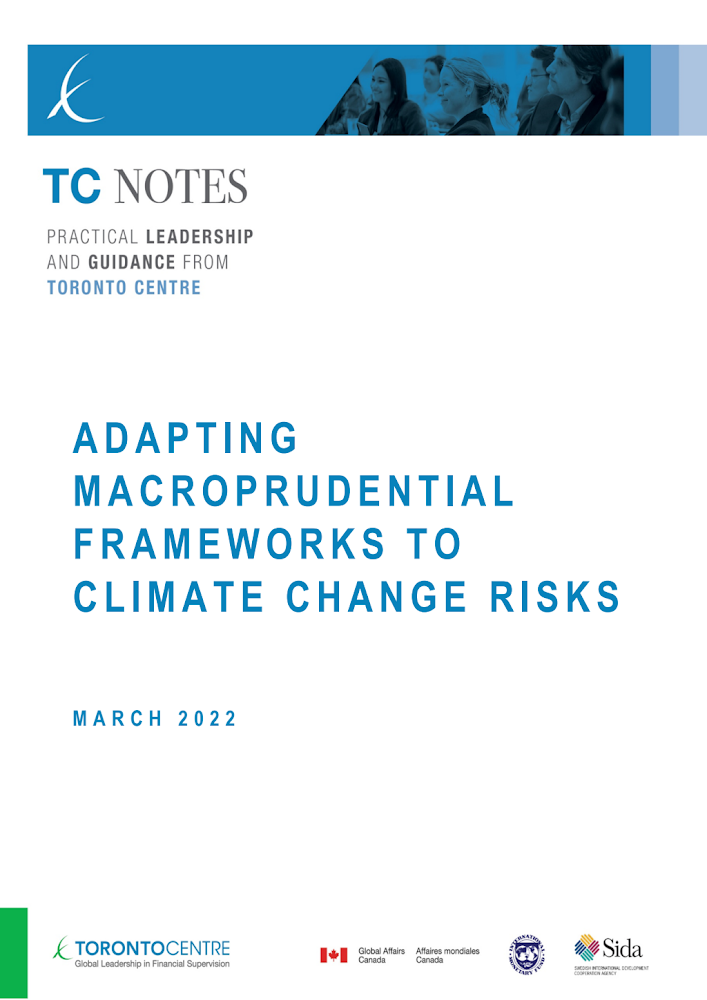
Adapting Macroprudential Frameworks to Climate Change Risks

Adapting Macroprudential Frameworks to Climate Change Risks

Year Published

2022

Contributing Organizations

Global Affairs Canada (GAC)
International Monetary Fund (IMF)
The Swedish International Development Cooperation Agency (Sida)
Toronto Centre

Type of Resource

Research/Insights Report
Guidance

Languages

English

Relevant Topics

Core Topic
Adaptation & Resilience
Topic 2
Risk Management

Target Audience

All

Relevant Geography

Global
Adapting Macroprudential Frameworks to Climate Change Risks

Resource Description

This resource explores how macroprudential policy can be adapted to address systemic risks from climate change. It analyzes physical, transition, and “green swan” risks and proposes ways to integrate them into financial stability frameworks.

Why This Matters

Climate risks unfold over long horizons and with high uncertainty. Integrating them into macroprudential frameworks can guide finance toward climate goals, strengthen stability, and reduce the chance of destabilizing “green swan” events.

Key Insights

  • Climate change generates systemic risks through procyclicality, stranded assets, and financial-economy feedback loops
  • Recommends aligning financial flows with Paris Agreement targets to reduce systemic risk
  • Proposes linking financial portfolios to sectoral emissions, requiring stronger data, taxonomies, and disclosures
  • Considers tools such as climate-related buffers, carbon-risk capital charges, and SIFI criteria, while warning of design and effectiveness limits

Was this resource helpful?

We'd love to hear from you! You can share your feedback or suggest a resource below.

Related Resources